Have you ever found yourself explaining a decision to someone, only to realize that no matter how much you explained, they still didn’t agree
with you?
So you explained it again. Maybe you changed your wording, provided more examples, or tried another approach. Eventually, you either
became frustrated or began questioning a decision you had previously felt confident about.
Sound familiar?
Most people have no idea how much mental energy they waste trying to get other people to understand, agree with, or approve of their decisions.
And here’s the part that fascinates me.
The more energy you spend trying to control how others perceive you, the less energy you have available to improve yourself.
The Approval Trap
In my work with athletes, executives, and teams, I frequently encounter people who are exceptionally capable but spend far too much time
worrying about how they are perceived.
An athlete makes a mistake and immediately looks toward the coach to see their reaction.
An executive makes a difficult decision and spends the rest of the day wondering whether everyone agrees with it.
A young professional receives criticism and becomes consumed with defending their intentions rather than examining whether there is
something valuable to learn.
Different situations. Same underlying problem.
Their attention has shifted from what they can control to what they cannot.
I often teach clients to recognize the difference between what I call a Look Good mindset and a Get Better mindset.
When you’re focused on looking good, protecting your image becomes a priority. You explain mistakes, defend decisions, and search for
validation.
When you’re focused on getting better, your priorities change.
Instead of asking, “How can I make them understand why I did that?” you begin asking, “Is there something here I can learn from?”
That simple shift changes everything.
Understanding Isn’t the Same as Agreement
One of the biggest mistakes people make is assuming that if they explain something well enough, everyone will eventually agree with them.
They won’t.
And that’s perfectly fine.
Two intelligent, reasonable people can examine the exact same circumstances and reach completely different conclusions.
This doesn’t automatically make either person wrong.
It simply means they see things differently.
You can respect someone’s perspective without surrendering your own.
Unfortunately, many people confuse disagreement with rejection. They interpret someone questioning their decisions as an attack on their
intelligence, competence, or character.
Once that happens, learning takes a back seat to defending.
And when defending yourself becomes more important than learning, your growth suffers.
The Difference Between Confidence and Defensiveness.
Here’s something worth thinking about.
Genuinely confident people don’t need to convince everyone they’re right.
They are willing to explain their reasoning, listen to opposing viewpoints, and even change their minds when presented with better
information.
That isn’t weakness.
That’s confidence.
Defensiveness, on the other hand, often reveals an underlying need to protect how we see ourselves.
When someone challenges our thinking, we have a choice.
We can become defensive and look for ways to prove them wrong.
Or we can become curious and look for something useful.
Being willing to change your mind is not a sign that you lack conviction. It’s evidence that you value growth more than your ego.
Of course, there are times when explaining yourself is necessary. Good communication is essential to healthy relationships, effective leadership, and successful teams.
The key is recognizing your motivation.
Are you explaining something to help another person understand?
Or are you explaining because you cannot tolerate the possibility that someone might disagree with you?
Those are two very different things.
Stop Trying to Win Every Conversation.
Imagine how much more productive you could be if you stopped trying to win every disagreement.
How much mental energy would you free up?
How much less frustrated would you become?
How many opportunities to learn might you discover?
The next time someone questions a decision you’ve made, experiment with something different.
Listen without immediately preparing your defense.
Consider whether their perspective contains something useful.
Explain your reasoning when appropriate.
Then move on.
You don’t need everyone to agree with you to make a good decision.
And you certainly don’t need everyone’s approval to continue growing.
Remember, the goal isn’t to prove you’re right. The goal is to keep getting better.
When you stop making other people’s approval a requirement for your peace of mind, you reclaim something incredibly valuable.
Your attention.
And where you direct your attention plays an enormous role in determining the quality of your life.
You can follow Sam on Instagram: @sam_obitz and on X: @SuperTaoInc
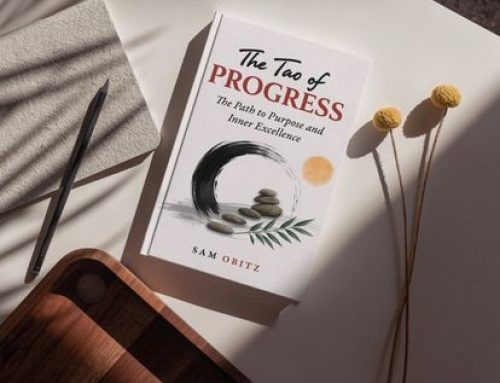
My new book, The Tao of Progress, is available here.