
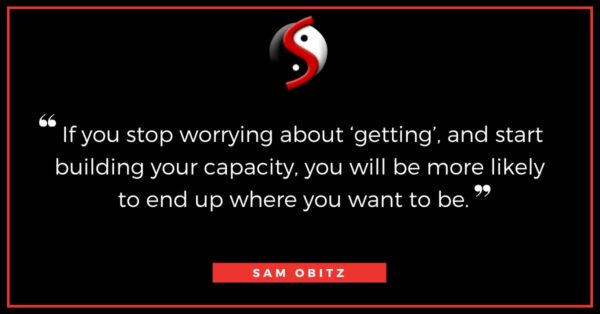
I’ve failed a ton more times than I will ever achieve.
That’s not false humility. That’s just the math.
But you know what… anything that is redeeming about me came out of those failures—not from boasting or bragging or making excuses.
And that distinction matters more than most people realize.
Because in today’s world, it’s incredibly easy to feel significant without actually becoming significant. You can talk about your plans. You can highlight your wins. You can curate your image. You can position yourself as someone who “gets it.”
But none of that builds anything real.
Boasting is seductive because it gives you a shortcut to significance. It lets you feel like you’ve accomplished something without doing the work required to actually accomplish it. It’s the emotional equivalent of eating ice cream—you get a quick hit of satisfaction, but there’s no real substance behind it.
Excuses operate in a similar way. They don’t elevate you—they just soften the blow. They help you avoid discomfort, avoid responsibility, and most importantly, avoid growth.
Both boasting and excuses serve the same master: your ego.
And your ego is not interested in making you better. It’s interested in making you feel better.
Failure, on the other hand, does the exact opposite.
Failure doesn’t care about your image. It doesn’t protect your feelings. It exposes you. It forces you to confront what’s real—your preparation, your habits, your mindset, your discipline.
And that’s why it’s so valuable.
If you can learn to view your failures objectively—without taking them personally—you unlock something most people never do. You stop asking, “What does this say about me?” and start asking, “What can this teach me?”
That shift changes everything.
Because now failure becomes data.
It becomes feedback.
It becomes the raw material for growth.
Making mistakes and owning them is the equivalent of eating your vegetables—your broccoli. It’s not always enjoyable in the moment, but it’s exactly what builds strength, resilience, and long-term capability.
Over time, that compounds.
While others are busy protecting their image, you’re improving your substance.
While others are explaining why things didn’t work, you’re figuring out how to make them work.
While others are talking, you’re building.
And here’s the part most people miss:
The people we admire most—the ones who are truly significant—aren’t the ones who avoided failure.
They’re the ones who used it.
So the next time you fall short, resist the urge to explain it away or cover it up with noise. Don’t rush to protect your ego.
Lean into it.
Study it.
Own it.
Because if you’re willing to do that consistently, failure stops being something that holds you back…
…and becomes the very thing that sets you apart.
You can follow Sam on Twitter: @SuperTaoInc